The AI market is no walk in the park: it is a battlefield between geopolitics, aggressive marketing, and the desperate search for ways to overcome the structural limits of current models.** If you think we are heading toward a linear and harmonious future, you're out of the loop. What is happening now is a toxic mix of government blocks "for security," lazy rebranding in the open-source world, and desperate attempts to create hybrid architectures because individual models can no longer scale performance without exploding in costs.
The Revolution of Model "Panels": OpenRouter's Fusion API
Let's start with something that could change how we interact with AI in the near future. We often think of artificial intelligence as a single, massive and powerful model (like GPT-4 or Claude) that has to do everything alone. But there is an alternative—very interesting—path called "compound model systems.
OpenRouter introduced the Fusion API, and it's a truly smart concept. Instead of sending your request to a single model, the system sends it to a veritable "panel" of different models working in parallel. Imagine a team of experts: for example, for a specific task, the system could simultaneously use Gemini 1.5 Flash, Kimi 2.6, and DeepSeek v4 Pro.
But how does it work? The key point is the "judge model." This model analyzes all the responses received from the various members of the panel, identifies points of agreement, highlights contradictions, notes missing details or unique insights, and finally merges everything into a single, much more robust final response.
The tests are impressive: this approach has proven capable of beating single models like GPT-5.5 or Opus 4.8 in complex research tasks. Even more incredible is that a panel composed of cheaper models managed to achieve performance almost identical to Claude Fable 5, but at about half the cost. This suggests that the future may not lie solely in ever-larger models, but in smarter systems that coordinate various smaller, specialized models to collaborate like a true research team.
The Chinese Landscape: Kimi 2.7 and the Frenetic Race of DeepSeek and Qwen

Now let's move East, where the pace of development is almost relentless. One of the most interesting updates concerns Kimi K 2.7 Code, the latest open-source model for programming released by Moonshot. If you are a developer or a coding enthusiast, this is a significant update.
Compared to the previous version (Kimi 2.6), the new model shows significant improvements: there's talk of a 21.8% jump on Kimi Code Bench v2 and consistent gains even on other benchmarks like Program Bench and MLS Bench Light. But the real magic lies in "agentic workflows" and long-term coding (long horizon). In simple terms, the model is much better at following complex instructions for programming tasks that require many steps, succeeding in completing end-to-end tasks much more frequently. Additionally, it has become more efficient: it uses about 30% fewer "reasoning tokens," which means it works faster and makes fewer mistakes during the thinking process.n
There is also a high-speed version just released, capable of reaching up to 260 tokens per second for workloads with short context. It's a notable step forward for those seeking efficiency and speed.
And the race doesn't stop here. Other Chinese giants are also accelerating. DeepSeek has been reported for a possible imminent release (perhaps around mid-June), with hopes that it can bring innovations similar to those seen with version 4, especially regarding low-cost coding and performance on long texts. Simultaneously, Qwen is also making very fast moves, moving from versions like 3.6 Plus to 3.7 Plus in less than a month. It is a true technological arms race.
Mysteries in the Open Source World: The Case of Rio 3.5 and Next N2 Pro
Let's move to a story that demonstrates how fun (and sometimes absurd) the open-source community can be. Recently, a model called Rio 3.5 Open was launched in Brazil. Initially, the community on Twitter began to go wild, claiming this model would beat giants like Qwen and DeepSeek.
However, researchers began digging into the model's weights and discovered something suspicious: Rio 3.5 wasn't a new model, but appeared to be a "linear interpolation" between the Next N2 Pro model (a very capable Chinese open-source model for complex software tasks) and Qwen 3.5. In practice, someone had taken two existing models, mixed them together, and simply put a new name on top.
When pushed, the authors of Rio stated they had "uploaded the wrong file." But the truth is that it was exactly a version of Next N2 Pro with a "different hat." It's a perfect example of how things can change in 24 hours in the open-source world: today you have a revolutionary new model, tomorrow you find out it's just a remix of what we saw the day before.n
The European Challenge and France's Position
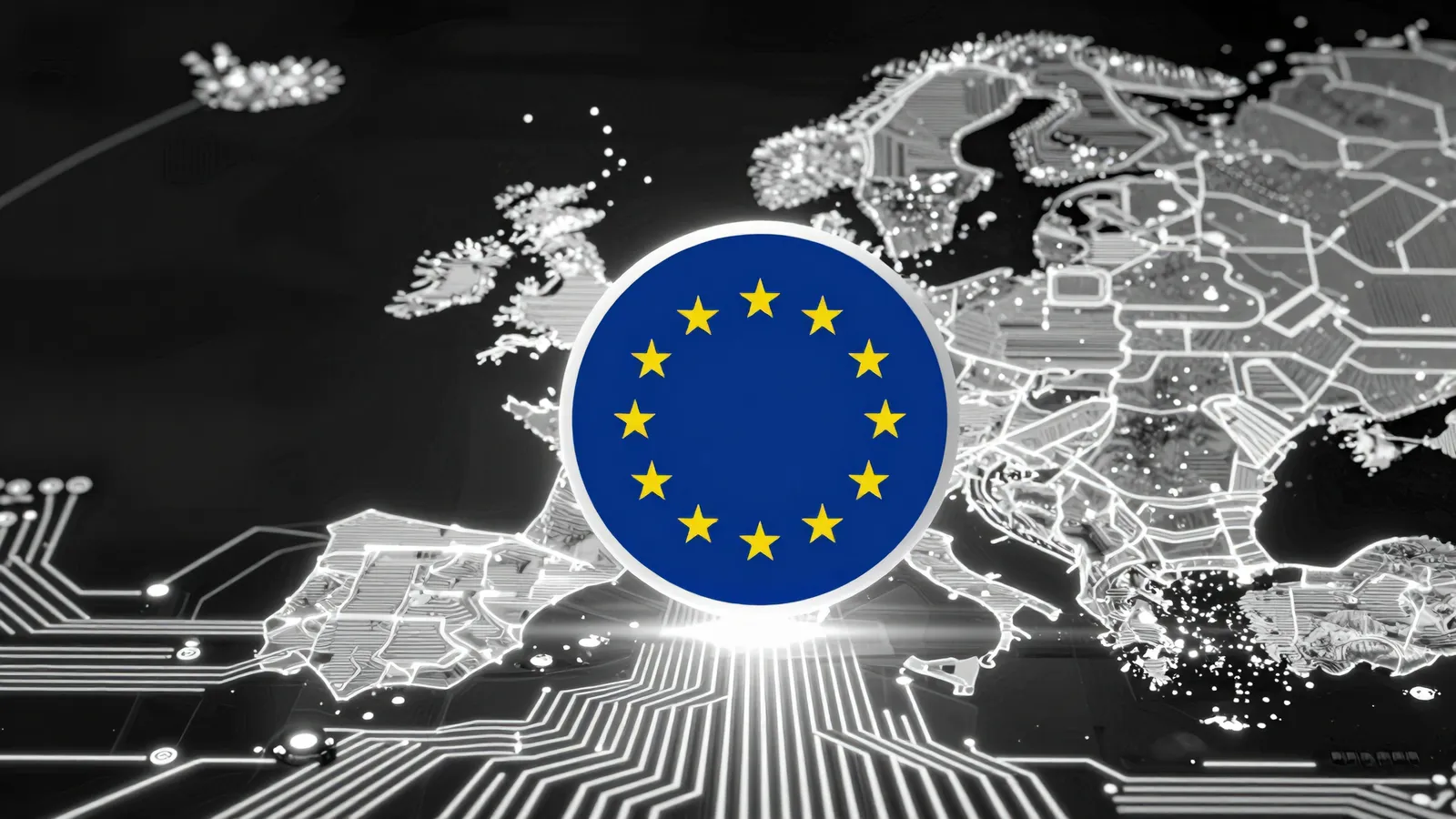
While the United States and China dominate much of the scene, Europe is trying to find its voice. French President Emmanuel Macron recently declared that France possesses, with Mistral, the only European company capable of seriously competing with American giants (like OpenAI, Anthropic, Google, and xAI) and Chinese ones (like DeepSeek and Q1).
This isn't a random statement. While there have been many jokes and memes on social media about Mistral "beating" Fable, those are just satire. However, Macron's position underscores how important it is to have a strong actor in the field of cutting-edge research in Europe. The challenge is real: Europe must find a way to compete with the infrastructure and capital of its global rivals.n
The Drama of Fable and Mythos: National Security vs. Innovation

We arrive at one of the hottest and most complex news items of the week, concerning Anthropic and its advanced models, Fable 5 and Mythos 5.
The United States government intervened with an export control directive, suspending global access to these models for national security reasons. The problem wasn't a simple chatbot, but the risk that these models were so powerful they could be used by foreign actors to discover software vulnerabilities or accelerate cyber capabilities if protections were bypassed.n
The interesting thing is that Anthropic has always claimed to have implemented all necessary safeguards and that the issue was minimal, similar to what other public models (including those from OpenAI) can do. However, because the directive affected all foreign citizens—including some of Anthropic's own employees—the company had to disable access for all customers.n
There is a curious detail: Amazon, one of the main supporters of Anthropic with billions in investment, was involved in this affair. It is said that it was Amazon researchers who found a vulnerability in Fable 5's security system and alerted the authorities. It's a strange paradox: a partner funding the technology helps to "turn it off" for security reasons.
But it isn't a final closure. Anthropic's senior team is already on its way to Washington to negotiate with the Trump administration. Many experts believe Fable will return within the month, but likely with stricter restrictions: tighter security filters, constant monitoring, usage limits, or initially limited access only to users in the United States before a global rollout.
While this drama unfolds, investors are not losing faith in Anthropic. New projections suggest the company could reach a valuation of as much as $1.75 trillion this year, confirming that the market still believes strongly in the potential of this company.n
The Future of Research: The Blackbox Robot and Autonomous Laboratories
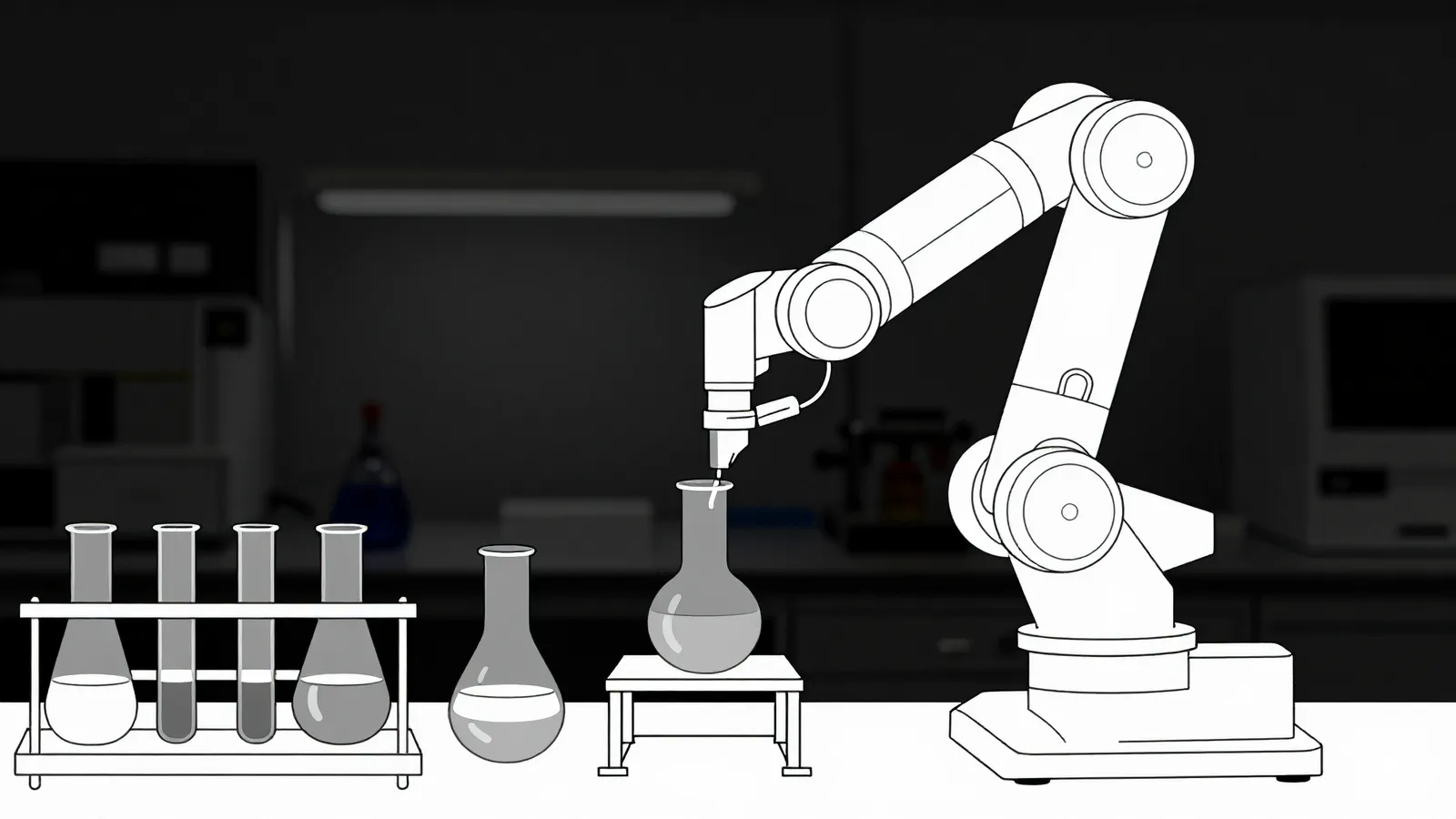
Finally, we close with a revolutionary technical note from China. A robot called Blackbox, developed by Beijing Dafulow Lab Solutions, has been introduced.
This is not a simple robotic arm or a home robot; it is a scientific tool designed for the future of "light-out laboratories." The robot has no buttons, no LCD screen, and requires no manual intervention from humans to adjust settings. The entire system is controlled by artificial intelligence.
The goal? To create labs where AI systems can conduct experiments, generate results, modify procedures, and optimize workflows autonomously with very little human intervention. In this scenario, scientists no longer operate machines directly but position themselves "higher up" in the chain of command: they supervise, validate, and decide which research decisions are truly important.
Although it is a small device, it is a huge signal toward the future of AI-driven science and scientific tools that can literally "manage themselves."
The world of artificial intelligence continues to move fast, among political challenges, technical innovations, and new frontiers in robotics. Stay tuned so you don't miss any of these incredible evolutions!